
Stories from the women we walked with
Mary's story
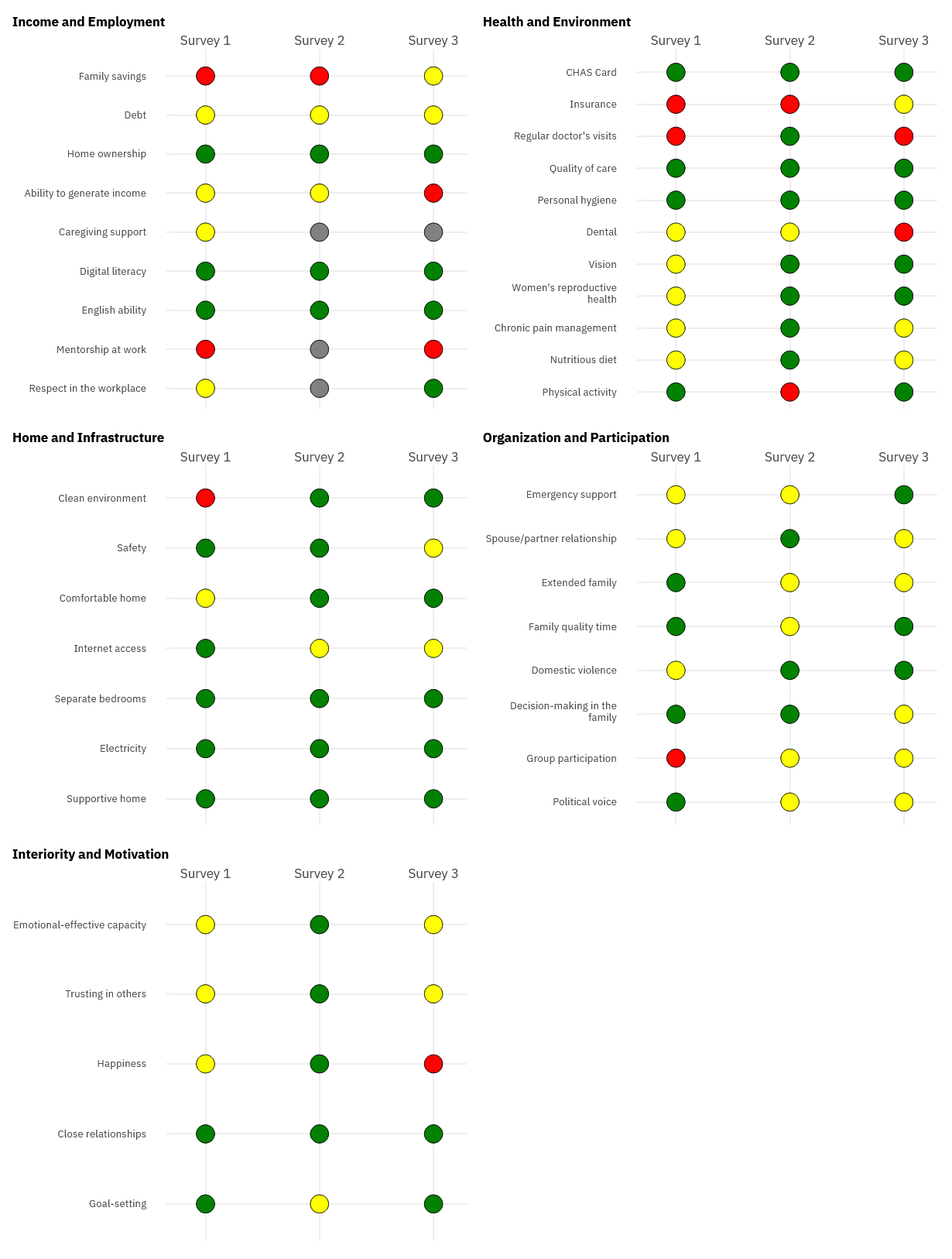
Mary, 46, is a new home-owner. She lives with her husband and two daughters—one in her mid-twenties and the other just 15. Occasionally, her step son also stays with them. Over the course of one year during the research, Mary has held two full-time jobs, but have also tendered her resignation for the second job. Her salary is about $2,400 a month, which helps bring the household income up to $6,000, but every dollar counts and things are rarely easy.
Health worries make sustaining a job hard
Mary has struggled with health problems for a long time. She has asthma, a heart condition, and very heavy periods, which make it hard for her to go through daily life. Her first job during the year was as a quality control and halal certification officer, but she often had to walk up and down stairs with a mask on—something very tiring because of her asthma. Mary eventually had surgery and needed a long stay in the hospital. Because she kept needing time off for her health, the company let her go and didn’t help with the hospital bills.
Thankfully, Mary got some income support from the research program, which helped her pay the hospital bills while she was out of work. She quickly found a new job as an admin assistant, needing to earn at least $2,000 just to cover family needs and the flat’s mortgage.
But her new job wasn’t easy either. Her mentor at work wasn’t supportive. Mary also had to walk 15-20 minutes to get there from the train—again, not great for her asthma. She’s just resigned after a successful interview at a new place,, but she’s waiting and growing anxious because there’s no job contract yet. She’s also worried because the doctor thinks her heavy periods could be from something serious, maybe uterine cancer. With so much else going on, Mary hasn’t found the strength to follow up with her doctors.
Stresses at home and the threat of loneliness
Work stress isn’t Mary’s only problem—home life is hard too. She and her husband don’t always communicate well, and dealing with her stepson’s teenage mood swings often falls on her alone. They tried counseling, but it didn’t really help since the rest of the family wasn’t involved.
Other problems have popped up too. Her older daughter was scammed by a loanshark, leading to threats at their home and even at Mary’s workplace. Her youngest daughter is struggling in school, but there’s just no money for tuition.
With all these worries building up, Mary sometimes feels like she can’t take any more. She’s glad for the research program’s income support—and also values having someone to listen to her problems.
Cash support is a needed, but is an insufficient solution
Mary gets $400 a month from the research program. She wanted to save some and maybe buy things for the new flat, but most of it went to medical bills and daily expenses after she lost her job. She’s not sure what she’ll do when the extra help ends, and with so much uncertainty ahead, she worries a lot.
Key areas of instability
- Her health keeps getting in the way of work and makes her afraid about the future
- She sometimes pushes aside her health problems because she has to keep earning money for the mortgage
- She doesn’t have many close friends or family to confide in, which leaves her feeling isolated with all her stresses